Why Important What to look for The S-shape gutter is quite distinctive, and can often be found in retrofitting on roofs that did not originally have any guttering. Usually they are made from cast iron. When to look Gutters should be cleared out regularly. Outlets from S-shaped gutters need to be regularly cleared of leaves …
Category: Heritage Guide
The Heritage Homes Guide
Niche Stoves
Why Important These are usually found in long corridors of larger homes or industrial workshops. These indicate the use and purpose of the original building, and historically important when a building has been subsequently converted or reduced in size. They are important for the heritage context of the whole building. What to look for There …
Name Plates

Why Important Badly placed, sized or coloured business signage can seriously undermine a hertiage area. Yet busineses do need to show where they are located. Within a conservation area, and especially on Listed buildings, there are rules regarding business signage. Failure to follow these rules can prove to be a very expensive, legal, hassel for …
Mud Scrapers (or Boot Scrapers)
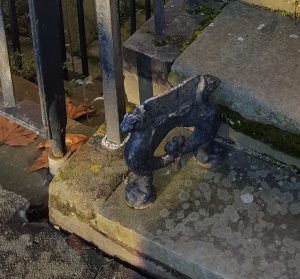
Why Important Although not needed today, due to better drainage and paved footways, they are, nevertheless, a key feature of period homes. From the 18th Century they indicated the status of the property, as they were used for middle class and higher class homes or businesses. What to look for The Cast-iron Mud Scrapers (usually …
Mantelpieces
Why Important Elegance and refinement are evident in the designs of many late Georgian mantelpieces in the Hamilton Square properties, their size and enrichment varying with the importance and function of the room. What to look for Mantelpieces of softwood, such as red pine, painted and carved or enriched with stucco or composition, were common …
Letter Boxes
Why Important With a heritage building, first impressions matter. Even small signs of inappropriate style or material stands out, and can suggest that unsympathetic changes have made which can devalue the whole property. What to look for If the building was built before 1840, then any letter box would be a retrospective addition. Therefore check …
Lead Watergate flashing
Why Important Lead is a malleable sheet metal which can be folded, welded and beaten to form any shape required to accommodate a roof. Lead can also be used in place of mortar at abutments. This may have a minor impact on the appearance of the roof, but if laid properly and secured, lead should …
Lead Sheet (19th Century)
Why Important Lead is a malleable sheet metal which can be folded, welded and beaten to form any shape required to accommodate a roof. What to look for These are made of long sheets of lead dressed over timber rolls and held in place by lead clips, which are screw-fixed to the timber under the …
Lead sheet
Why Important What to look for When to look How to fix Avoiding creating problems Historical background
Lead Gutters
Why Important Leadwork is formed by a series of laps and steps and is not sealed. If water builds up it can find its way over up-stands and leak into the building. What to look for Acid run-off is caused by algae that forms on slates, generally on the shaded pitches, and manifests as pale …
